



Producing short-form dramas is no longer the biggest challenge. The real difficulty: How do you distribute the right content to the right audience in the right market?
In today's short drama industry, success depends less on production and more on distribution. The platforms growing fastest are the ones that know how to localize content, reach new audiences, and scale stories across markets.
This guide breaks down the distribution strategies, localization approaches, and platform models driving global short drama growth.
What Is Short Drama Distribution?
Short drama distribution is the process of helping one story reach multiple audiences through the right mix of platforms, languages, and revenue models. In simple terms, it shapes how viewers discover your story, how far it travels across markets, and how it creates lasting growth opportunities.
The importance of distribution has grown alongside mobile entertainment. According to the Ericsson Mobility Report, social media videos account for 70–80% of smartphone video traffic, reflecting the growing importance of mobile-first platforms and algorithm-driven content discovery.
After analyzing leading short drama platforms and creator strategies, we found that five pillars play a central role in distribution success.
Why Localization Deserves Special Attention
Among these five pillars, localization has emerged as one of the most effective strategies for creators to expand beyond their home markets and reach global audiences. Through dubbing, subtitles, and AI translation, creators can adapt one short drama for different audiences while significantly reducing the need for additional production efforts.
Recent video localization studies suggest that localized videos can generate up to 40% higher engagement than non-localized versions, demonstrating how adapting content to local languages and audiences can significantly improve viewer response.
For creators, localization is no longer just translation, it's a market expansion strategy.
Our Observation
The most successful short dramas are rarely built around a single platform.
Instead, they combine:
- Social platforms → Audience growth
- Drama apps → Revenue generation
- Localization → Market expansion
- Licensing → Long-term scalability
In other words, distribution is no longer a destination, it is a growth system.
Key Takeaway: Short drama distribution is not simply about publishing content, it's about creating opportunities for one story to grow beyond its original audience and market.
Ultimately, the difference between a local hit and a global success often comes down to how effectively it is distributed.
The Evolution of Short Drama Distribution
Short drama distribution has evolved from channel-controlled access to algorithm-driven discovery.
In the past, creators relied on broadcasters and fixed schedules to reach audiences. Today, recommendation algorithms connect content with viewers based on their interests and behavior, making distribution faster, more scalable, and less dependent on traditional gatekeepers.
Here’s how short drama distribution has evolved over time:
Why This Matters
Success is no longer determined by access to distribution channels. Instead, it depends on how well content performs within recommendation systems. In other words, distribution has shifted from getting permission to publish to getting discovered by the right audience.
Major Short Drama Distribution Channels
Short drama distribution is built on interconnected channels that help one story move from audience discovery to monetization and ultimately to global expansion.
Instead of relying on a single platform, successful creators combine different distribution layers, with each layer serving a specific purpose from audience discovery and monetization to localization and global expansion.
1. Dedicated Short Drama Platforms
These platforms are built specifically for serialized short dramas and represent the primary monetization layer of the ecosystem.
They typically use paid episodes, subscription models, or coin-based unlocking systems, making them highly optimized for direct revenue generation.
Top 5 Dedicated Short Drama Platforms.
2. Social Platforms
These platforms function as the primary discovery layer, where algorithms push clips, trailers, and highlights to large audiences. Their primary role is audience discovery—helping creators build visibility and attract viewers before monetization begins.
Top 5 social platforms for short drama
3. Licensing & Partnerships
Unlike dedicated short drama platforms, these services focus on premium distribution, helping creators bring successful stories to broader audiences through licensing and international partnerships.
Creators typically explore this layer when their focus extends beyond audience growth and toward:
- Premium distribution
- Global audience expansion
- Long-form monetization beyond mobile apps
Top 5 OTT platforms for short drama
Top 5 regional distributors for short drama
How These Distribution Layers Actually Work
Short drama distribution is not a collection of platforms, it is a layered system of audience conversion and value building.
Across the industry, content typically moves through a consistent progression based on performance signals, audience response, and platform design. This is an observed distribution pattern rather than a formal industry framework.
Each layer plays a distinct role in how content evolves from visibility to global scale.
How the System Actually Works
This ecosystem is not based on linear publishing—it is driven by performance across interconnected distribution layers.
Each stage acts as a filter that determines what moves forward:
- Engagement drives visibility
- Visibility creates monetization opportunities
- Monetization funds localization
- Localization enables global expansion
A short drama typically moves through this pipeline:
Viral discovery → Revenue Conversion (Monetization) → Market Adaptation (Localization) → Global Licensing
Key Insight
Short drama success is not defined by where content is published, but by how effectively it progresses through distribution layers based on audience performance and market fit.
Each layer filters content based on its ability to:
- Capture attention
- Generate revenue
- Adapt to markets
- Scale into global IP
Note: This progression reflects real-world distribution behavior patterns across social, mobile-first drama, regional, and OTT ecosystems, rather than a formally defined or standardized industry framework.
Global Short Drama Distribution Strategy
Earlier, we learned that the most successful short dramas combine multiple platforms and markets to grow. We also found that localization plays a central role in global expansion, allowing creators to extend one story beyond its original market.
But how does this strategy work in practice?
To better understand the process, we simulated a real-world distribution workflow and followed the same steps many creators use when expanding internationally.
Our Test Scenario
To make this strategy practical, we tested a fictional yet realistic short drama distribution workflow.
Our example was:
- Genre: Romance
- Original Language: Spanish
- Format: 20 episodes
- Episode Length: 1–2 minutes
- Initial Market: Spain
Our Evaluation Scenario: Could a single short drama expand into multiple international markets without creating separate productions for each region?
Here’s How We Approached It
Rather than pursuing every distribution channel, we focused on a simple strategy: target the right markets, localize the story, test performance, and optimize monetization.
This step-by-step process helped us evaluate how a single story could scale across multiple regions without significantly increasing production costs.
Step 1: Identify the Right Target Markets
Before translating or publishing the drama, we first identified markets where:
- Romance dramas already perform well
- Mobile viewing is common
- Short-form monetization models are widely adopted
After reviewing audience trends, we focused on four markets:
What we learned:
Success in global expansion comes not from targeting the largest audience, but from finding markets where your story naturally fits.
Step 2: Localize the Content
Once the target markets were identified, we explored how a single Spanish short drama could be adapted for multiple audiences through:
- AI dubbing
- Multilingual subtitles
- Localized titles
- Translated promotional clips
To simplify this process, we tested Mediaio Video Translator for micro-drama localization.
Our goal was simple: Could one story still feel emotionally authentic across multiple languages?
Step 3: Test Different Formats
After localization, we didn't distribute all episodes immediately. Instead, we tested:
Insight: We found that different formats served different goals: short clips increased visibility, while the first few episodes helped build lasting audience engagement.
Step 4: Optimize Monetization
Finally, once audience traction became visible, we explored different monetization approaches:
What We Learned
Global short drama distribution isn't about producing more content.
It's about helping the same story travel across:
- Languages
- Markets
- Platforms
- Monetization systems
And increasingly, localization is the bridge that makes this expansion possible.
Challenges in Short Drama Distribution
Earlier, we explored how creators can scale a single story across multiple markets through localization, strategic platform selection, and market testing. While the opportunities are expanding rapidly, creators still face several practical challenges when scaling short dramas globally.
From our analysis, three challenges consistently shape the efficiency with which creators localize, scale, and monetize short dramas across global markets.
What Successful Creators Do
The most successful creators grow deliberately—localizing where it matters, testing audience demand early, and expanding based on performance.
How AI Changes Short Drama Distribution
AI is removing many of the barriers that once limited global short drama expansion. Today, creators can localize one story faster, test new markets more confidently, and scale distribution across regions with greater ease.
Instead of creating new productions for every region, creators can localize one story, test new markets, and scale globally with greater efficiency.
AI is helping creators:
- Localize Faster — Translate and dub content into multiple languages with greater efficiency.
- Reduce Costs — Reduce the cost of adapting one story for multiple languages and markets.
- Test Globally — Experiment with new markets, validate audience demand, and scale with greater confidence.
The Big Shift
- Before: One drama → One market
- Now: One drama → Multiple languages → Multiple markets
The future of short drama success may not depend on producing more stories, but on helping one story expand across languages, markets, and platforms.
AI is not changing the stories creators tell. It is changing how far those stories can travel.
The New Distribution Mindset
But what does this process look like in practice?
For this test, we continued with the same Spanish romance short drama discussed earlier. To simulate a real production workflow, we selected 10 episodes from the series and explored how they could be translated and localized simultaneously using a batch workflow.
To evaluate how creators can localize an entire series efficiently, we tested batch translation, AI dubbing, and multilingual subtitles within a single workflow using Mediaio Video Translator.
How to Translate Short Dramas into Multiple Languages in Batch with Mediaio Video Translator
Step 1. Start by uploading all 10 episodes together instead of translating them individually. Batch uploading allows an entire short drama series to be processed within a single workflow.
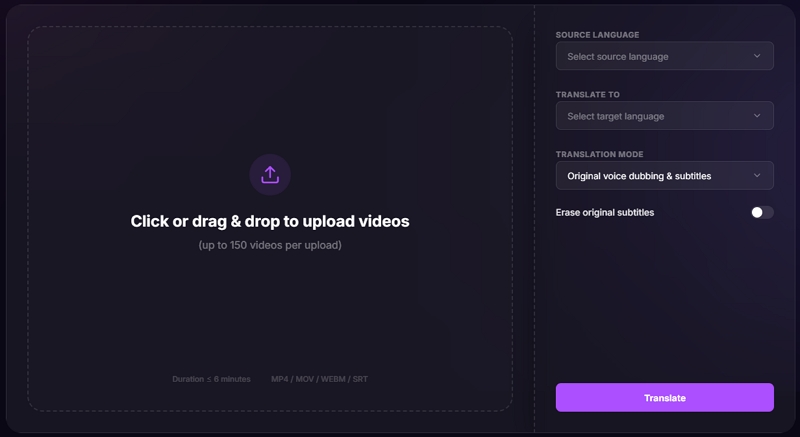
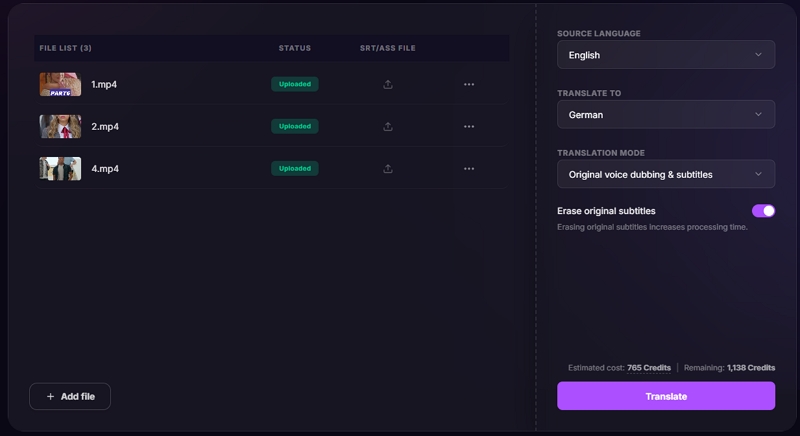
Step 2. Choose the source and target languages, enable the AI dubbing option, and start the translation process. You can choose whether to remove the subtitles from the original video.
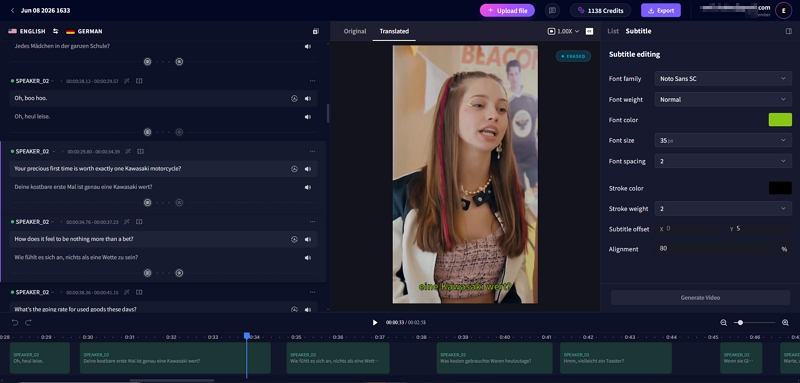
Step 3. Once processing is complete, preview the translated videos and review AI dubbing, subtitles, and synchronization. Subtitle appearance, timing, positioning, and styling can also be adjusted if needed.
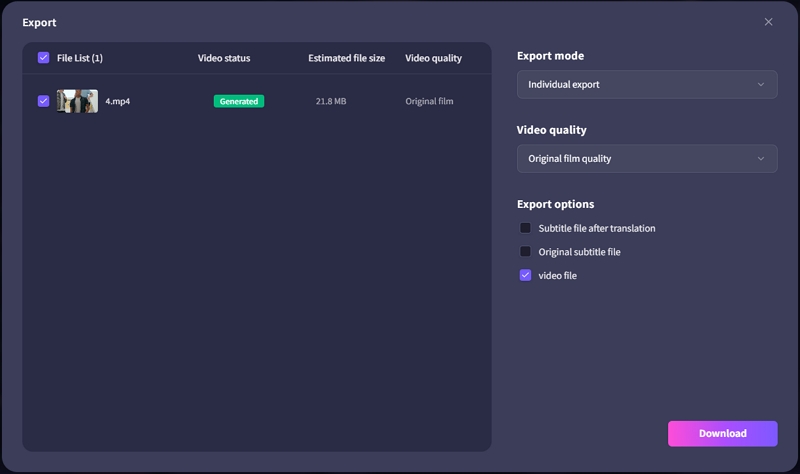
Step 4. After making the necessary edits, export the translated videos. And prepare them for distribution across different markets and platforms.
Our Observation
What made this workflow most valuable wasn’t just speedier short drama translation, but the capacity to localize several episodes in parallel. For short-form drama creators, this makes it easier to expand a single story across multiple languages while keeping production efforts manageable.
FAQs for Short Drama Distribution
Q.1. How do you distribute a short drama?
Short dramas are typically distributed through a combination of social platforms, dedicated short drama apps, regional distributors, and OTT platforms. Most creators use social media for audience discovery, drama apps for monetization, and localization strategies to expand into international markets.
Q.2. How can I translate a short drama into multiple languages?
AI-powered localization tools allow creators to translate short dramas while supporting dubbing in multiple languages, subtitles, and batch workflows. This allows one drama to be adapted for multiple markets without reshooting the original content. We tested Mediaio Video Translator because it combines batch translation, multilingual dubbing, and subtitle generation within a single workflow.
Q.3. Can short dramas make money?
Yes. Income streams for short dramas include paid episodes, subscription services, advertising, brand partnerships, and licensing opportunities. To boost overall income, many successful creators rely on multiple monetization models spanning different platforms and markets.
Q.4. What is the best AI tool for short drama localization?
The best AI localization tool varies based on workflow needs such as dubbing quality, subtitle support, and batch processing features. For creators producing serialized short dramas, tools that combine AI dubbing, multilingual subtitles, and batch translation can significantly simplify the process of global expansion. In our workflow, we tested Mediaio Video Translator because it supports these features within a single localization process.
The Future of Short Drama Distribution
Short drama distribution is undergoing rapid transformation, creating new pathways for creators to access international viewers.As we explored throughout this guide, success is no longer determined by a single platform or distribution channel. Rather than a single factor, it depends on how creators coordinate localization, platform selection, and global expansion.
With the rise of AI tools, distributing content across multiple languages has become faster and easier. It allows one story to extend across different markets and platforms with minimal barriers. In the years ahead, the biggest advantage may not be creating more stories—but helping one story travel farther than ever before.